
Key Takeaways
- A properly funded revocable living trust keeps your assets out of probate, letting a successor trustee distribute them without court involvement.
- Probate commonly runs nine to 24 months and can consume 3 to 8 percent of an estate's value in fees, all as public record.
- The most common trust failure is funding. An unfunded trust does nothing to avoid the probate process.
- A revocable trust does not shield assets from creditors or reduce estate taxes on its own.
- You do not need a high net worth. If you own a home, a living trust likely saves your family more than it costs.
*Written by Kacie Gamble Tym, Mother & Estate Planning Attorney, Arbor Legacy Lawyers P.C.* Admitted to the Tennessee Bar in 2010, Kacie brings experience across estate planning, real estate, and title matters to individuals and families. A mother of three herself, she blends legal and real-life insight to make every closing smooth and every estate plan secure, helping clients protect what matters most through Arbor Legacy's life and legacy planning model.
A family near Hixson recently watched a loved one's modest home, bank accounts, and personal property sit frozen in Hamilton County probate court for many months while fees quietly drained the estate. Much of it could have been prevented with the right plan. So does a living trust avoid probate? The short answer is yes, when it is set up and funded correctly. This article explains how a revocable living trust works, when it can still fail, and what it takes to keep your family out of court in Tennessee, Georgia, and North Carolina.
Probate Is More Disruptive Than Most Families Expect
Full probate commonly runs nine to 24 months before an estate is closed, according to Charles Schwab. Total probate costs for a $500,000 estate typically run about 3 to 8 percent of gross value, or roughly $15,000 to $40,000. Our overview of wills and trusts walks through the basics.
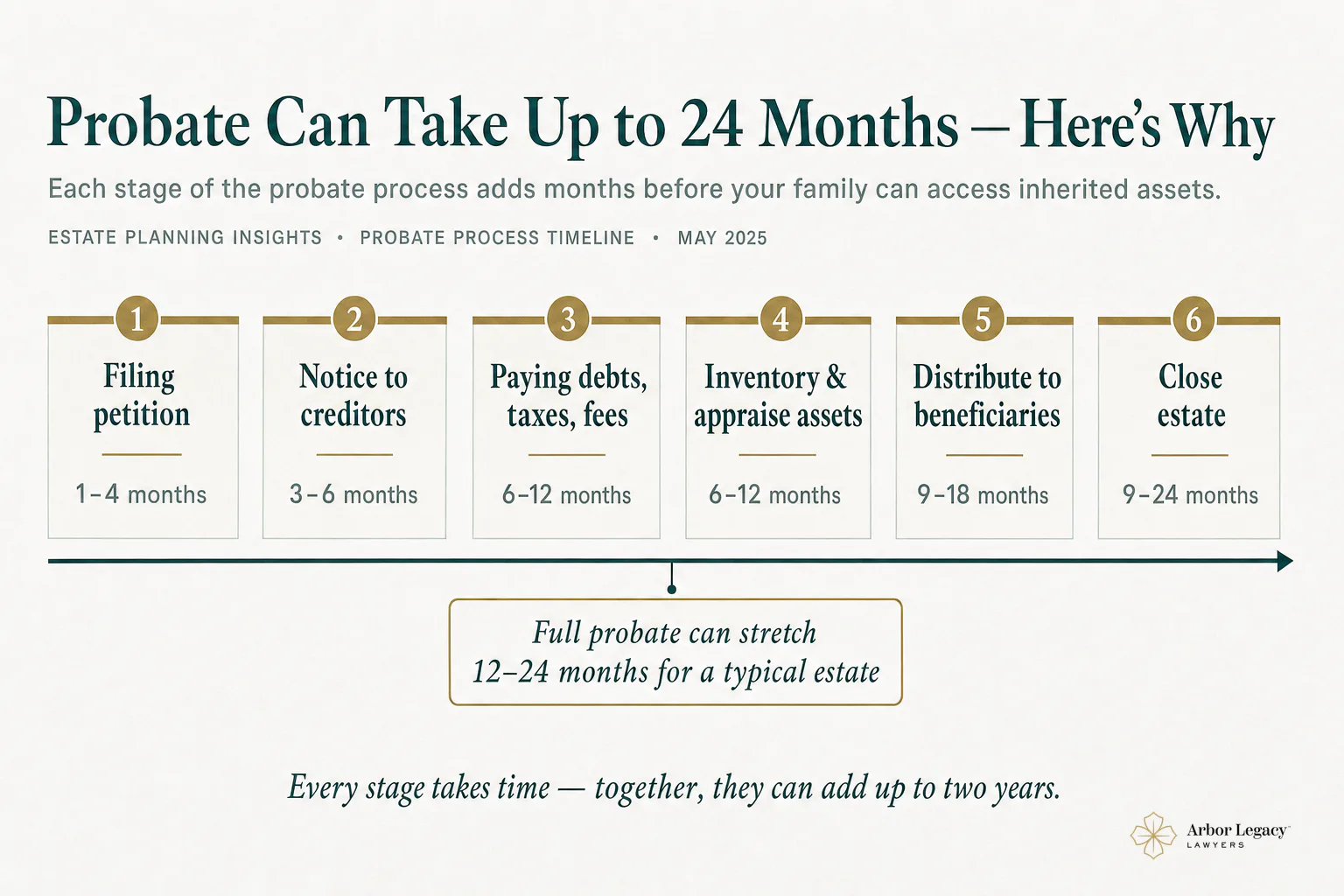
Probate filings also become public record. Once an estate opens, the assets, debts, and beneficiaries are accessible to anyone who requests the court files, per Legal Clarity.
Families in all three states are especially exposed. Tennessee's small-estate procedure covers estates up to $50,000 and typically excludes real estate, with a 45-day waiting period. Georgia's small-estate affidavit applies only when an intestate person leaves $10,000 or less, and North Carolina's covers personal property of $20,000, or $30,000 if married. Owning a home usually means full court administration, so a homeowner needs an estate plan, not just a will. A living trust versus a will is not a cosmetic choice for homeowners.
A Living Trust Avoids Probate Because Assets Never Pass Through Your Estate
A revocable living trust is a legal arrangement where you transfer ownership of your assets into the trust during your lifetime while staying in full control as trustee. Revocable living trusts provide the legal framework for bypassing the probate court process entirely when properly funded. Assets properly transferred into the trust never become part of your probate estate, so they bypass probate entirely, as ACTEC explains.
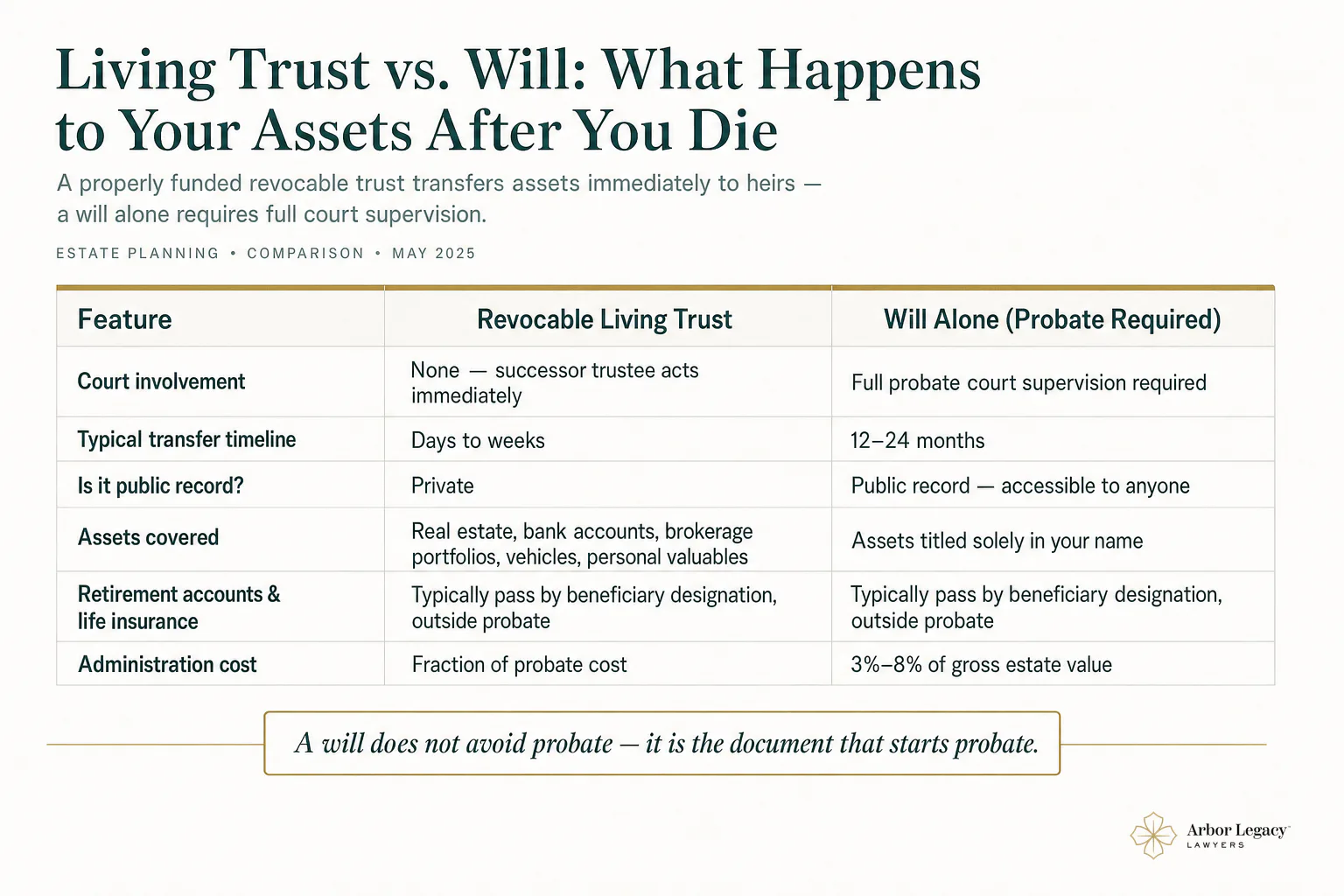
At death, the successor trustee you named acts immediately, without court involvement or court approval, presenting the trust document to a bank so the account transfers with no judge required. An executor under a will cannot do that until probate court validates the appointment.
Most trust assets can live in a revocable trust, including your home, bank accounts, brokerage accounts, and personal property. Putting your family home in a trust is often the single biggest probate savings. Life insurance policies and retirement accounts typically pass through beneficiary designations, so they usually stay outside the trust.
When a Living Trust Can Still End Up in Probate
A leading reason revocable trusts fail is funding. Signing a legal document like a trust achieves nothing by itself. If property stays titled in your name at death, that asset still goes through probate, according to Legal Clarity, a risk we cover in our look at how DIY documents leave families with an expensive mess.
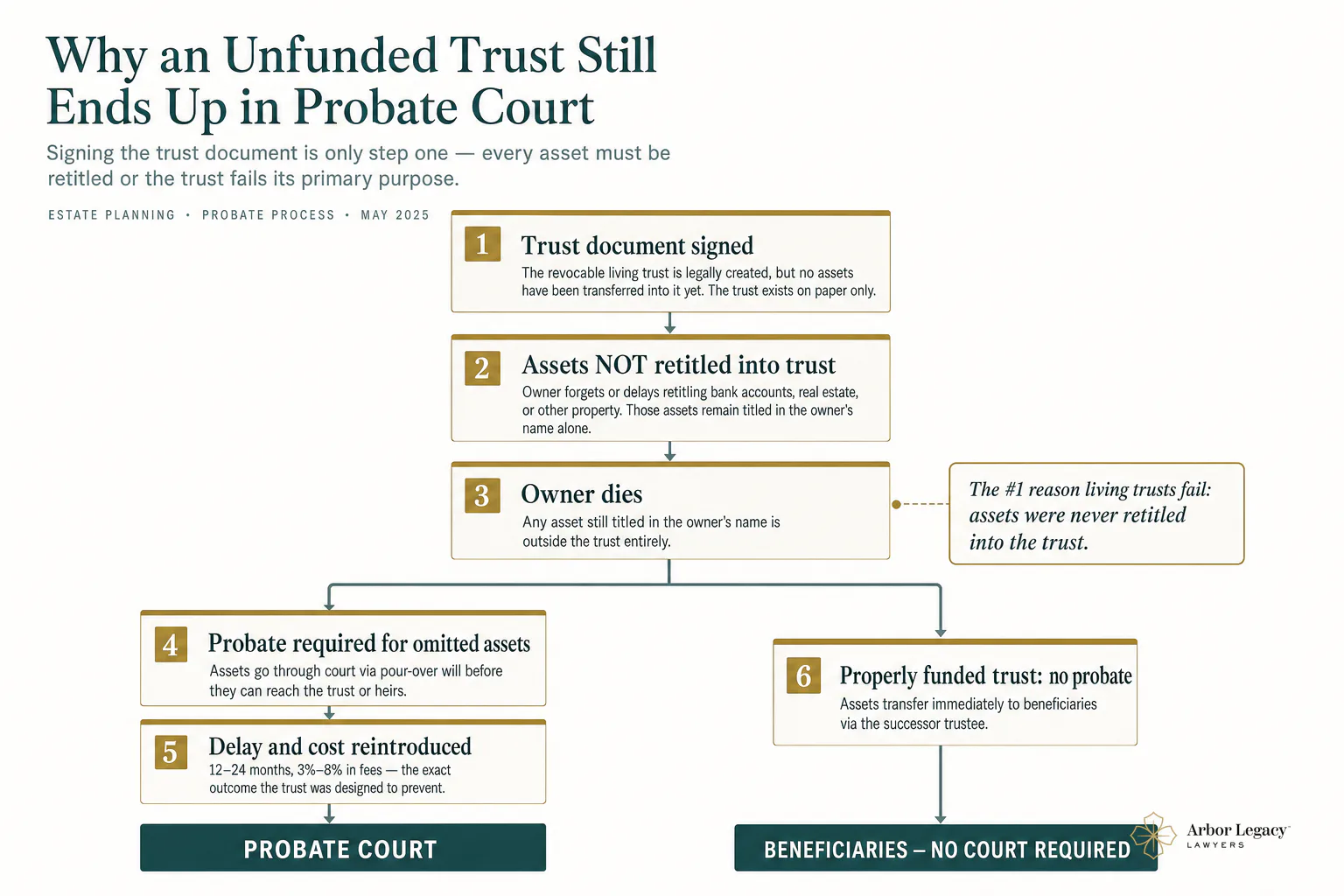
Any asset with no beneficiary designation and no trust title becomes a probate asset even when a trust exists. A pour-over will can catch these stray assets, but it still triggers a legal process and court intervention for them first. That is why your estate plan needs review every time you acquire something new.
A Revocable Trust Does Not Protect Assets From Creditors or Reduce Estate Taxes
Because you keep full control of a revocable trust during your lifetime, creditors can still reach those assets. Tennessee's trust code confirms that a revocable trust's property remains subject to the trust creator's creditors' claims, per FindLaw. If asset protection is the goal, the choice between revocable and irrevocable trusts matters.

A standard revocable trust also offers no special tax reduction. The federal estate tax exemption sits at $13.61 million per individual for 2024, rising to $13.99 million in 2025 and $15 million in 2026, with inflation indexing after that, according to the IRS. Families worried about estate taxes, Medicaid, or asset protection typically need an irrevocable trust, a point our guide to the new tax law and your family's trust explores further.
You Do Not Need a High Net Worth to Benefit From a Living Trust
In a 2024 survey, 40 percent of Americans without a will cited "not enough assets" as their reason, up from 35 percent the year before, according to Caring.com. That reasoning misses the point. Anyone who owns real estate, has minor children, cares for a loved one with special needs, or wants to spare their family a court process benefits from a revocable living trust. Many people are also surprised to learn that special needs trusts can be coordinated within this kind of plan.

The real question is cost and delay. Probating a $500,000 estate can run $15,000 to $40,000 in fees, per First Heritage Funding. By comparison, working with an attorney to create a comprehensive estate plan built around a revocable trust is far more affordable than most families expect. Estate planning attorney Matthew "Web" Raulston works with families using transparent pricing. Celebrity cases such as Matthew Perry's estate plan show the same lesson at a larger scale.
Your Living Trust Only Works If It Stays Current as Your Life Changes
Marriage, divorce, a new child, a new home, or a move to another state can leave a trust outdated or leave assets outside it. Caring.com's 2025 survey found many Americans update their plans in response to major life events, according to Caring.com. The firm's Life & Legacy Planning model treats your estate plan as an ongoing relationship. Scheduling a regular estate plan review is how good plans stay good — and how your trust continues to reflect not just your assets, but your values, your relationships, and the legacy you want to leave behind.
A revocable living trust manages assets for minor children, but it does not name who will raise them. That requires guardianship planning, the heart of Kids Protection Planning. Without a named guardian, a judge decides custody.
Frequently Asked Questions: Does a Living Trust Avoid Probate?
What is the downside of a living trust?
It costs more to set up than a basic will and requires retitling assets. If funding is incomplete, the trust fails to avoid probate for those assets, and it does not protect against creditors or reduce estate taxes.
What is the best trust to avoid probate?
A revocable living trust. Families with asset protection or tax goals may also need an irrevocable structure.
Which assets do not go through probate?
Assets held in a trust, accounts with named beneficiaries, payable-on-death bank accounts, and jointly owned property with survivorship rights.
Why would a trust have to go through probate?
When it was never fully funded. A pour-over will can direct stray assets into the trust, but the court still processes them first.
What to Do If You Want to Keep Your Family Out of Court
Without a properly funded living trust, your family faces a public, slow, and expensive probate process — legal matters that could have been avoided with proper planning. Arbor Legacy Lawyers helps families across Tennessee, Georgia, and North Carolina build plans that keep loved ones out of court and out of conflict — whether you're in Chattanooga, Atlanta, or Asheville. Get started with Arbor Legacy Lawyers and schedule a Life & Legacy Planning Session today, no matter which state you call home.
This article is a service of Arbor Legacy Lawyers P.C. and is provided for educational and informational purposes only. It does not constitute legal advice and does not create an attorney-client relationship. Estate planning laws vary by state; consult a qualified attorney about your specific situation.
Kacie Gamble Tym, Mother & Estate Planning Attorney, Arbor Legacy Lawyers P.C.