
Key Takeaways
- Only 32% of U.S. adults have a will, 31% an advance directive Pew Research Center; verify with signed documents.
- The durable power of attorney is most urgent: without it, a court picks who manages a parent's affairs.
- 42 U.S.C. §1396p sets a 60-month look-back on transfers for long-term care Medicaid — nursing facility care and, at each state's option, certain home and community based services — not for every Medicaid category, and a few states use different structures; plan early.
- A revocable living trust avoids probate only for assets retitled into it, funding is the skipped step.
- One conversation isn't enough: The Conversation Project found 92% say end-of-life discussions matter, only 32% have had one.
*Written by William Mone, Family & Estate Planning Attorney, Arbor Legacy Lawyers P.C.* William works with individuals, families, and business owners, delivering practical guidance tailored to their goals. His practice spans real estate, small business law, family law, estate planning, and probate. With a steady approach and clear communication, he builds strategies that provide clarity and stability, helping clients protect what matters most through Arbor Legacy's life and legacy planning model.
Most families around Hixson and Hamilton County never ask what their parents have arranged until a fall, a stroke, or a memory diagnosis forces the question, and by then some options are gone. Elderly estate planning is the work you do before that call. This guide covers the documents that cannot wait, the decisions that expire when mental capacity does, and the steps that keep your family out of court and out of conflict.
Why Elderly Estate Planning Is Different From Ordinary Estate Planning
Planning at 75 is not planning at 45. Elderly estate planning faces two constraints, narrowing legal capacity, and care costs that can consume the estate before anyone inherits.
The capacity window is the central constraint
Wills, trusts, and powers of attorney require a signer who understands them. The Alzheimer's Association reports 7.4 million Americans 65 and older have Alzheimer's dementia: 5.2% of ages 65-74, 13.8% at 75-84, 35.8% at 85-plus. Sign before diagnosis.
Long term care costs change the math
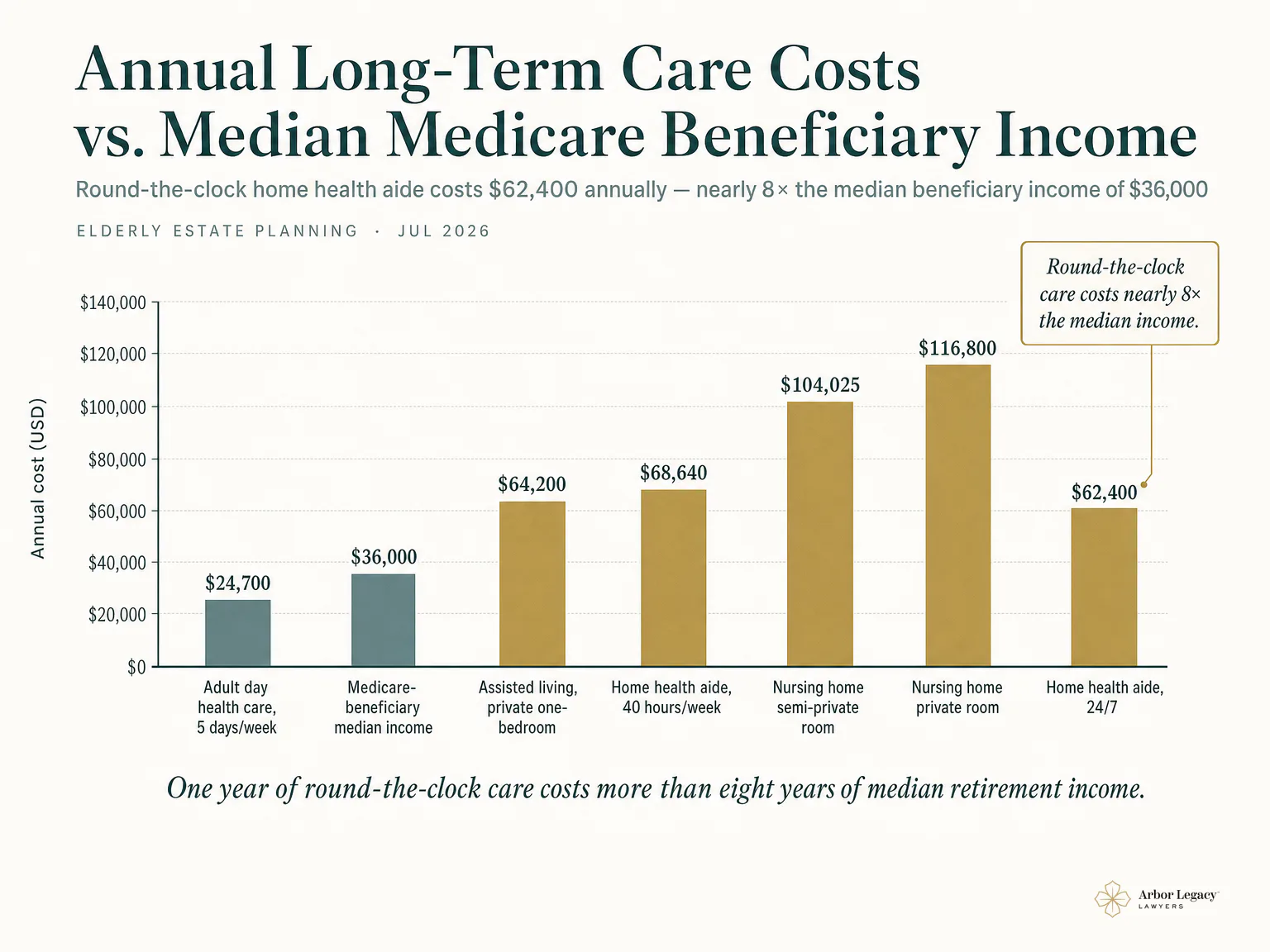
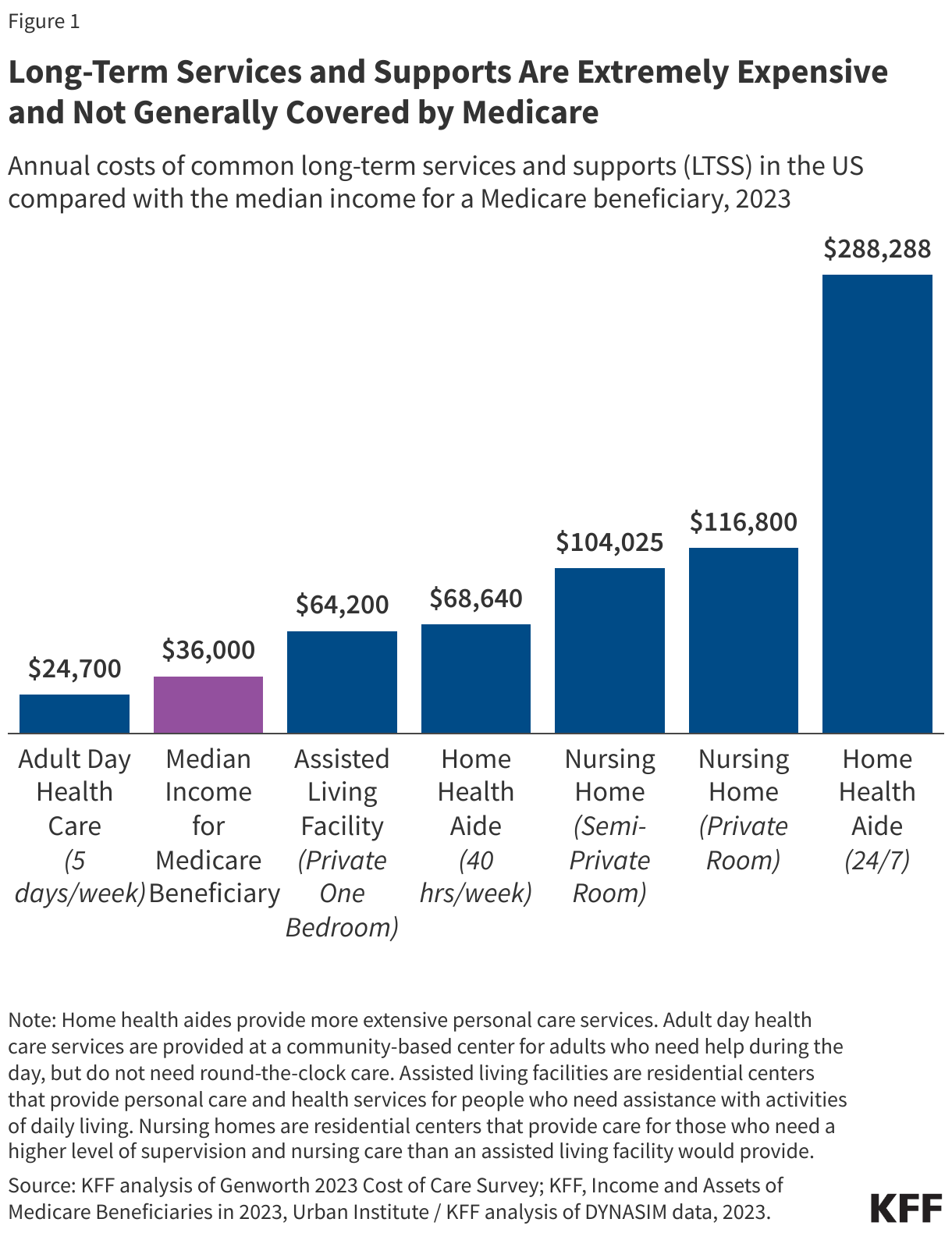
A private nursing home room's national median was $116,800 in 2023 versus median Medicare beneficiary income near $36,000, per KFF, CareScout's 2025 tables show $129,575. Any plan ignoring long term care costs, or the elder law planning around them, is incomplete.
Adult children and parents plan on different clocks
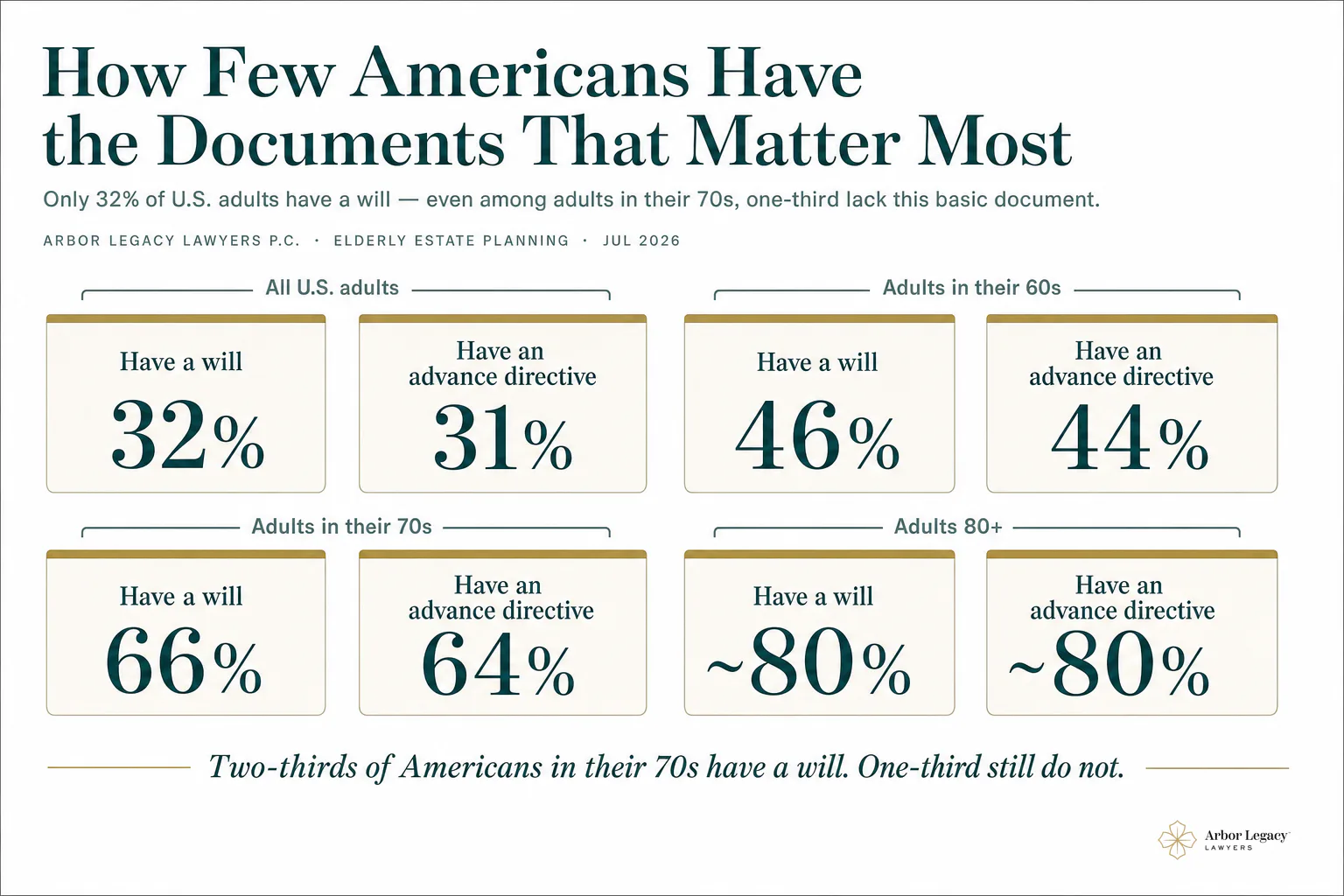
Pew found only 46% of adults in their 60s have a will, versus 66% in their 70s, and the adult child usually starts the conversation. Bring a written agenda.
The Core Legal Documents Every Elderly Person Needs Right Now
Four documents matter most, durable power of attorney, healthcare directive, will, and often a revocable living trust. Pew Research Center found only 32% of U.S. adults have a will and 31% a living will, rising to 46% and 44% in their 60s and eight in ten past 80.
A durable power of attorney before it is needed
A durable power of attorney covers finances and legal affairs if your parent cannot, nondurable authority ends at incapacity. Only 50.6% of older adults with dementia or impaired cognition have one, per a national study published through NIH. Agents should know what a power of attorney does and does not make them liable for.
Healthcare directives and living wills
Directives and living wills state treatment wishes and name a spokesperson. Tennessee, Georgia, and North Carolina publish their own forms, use current state versions.
Wills and trusts as the transfer foundation
A will controls probate assets, a revocable living trust avoids probate and lets a successor trustee manage assets during incapacity. Our wills and trusts overview shows which fits.
How a Revocable Living Trust Keeps Families Out of Probate Court
A funded revocable living trust avoids probate for assets titled in it and lets a successor trustee act if capacity is lost.
What probate costs families
Probate is the court-supervised transfer of assets after death, AARP's policy review confirms costs vary by state and filings are generally public.
How the trust works during incapacity
A successor trustee steps in without a guardianship petition, complementing the durable power of attorney.
Funding is what makes it work
An unfunded trust, no house, accounts, or business interest retitled, won't avoid probate. Funding the trust means retitling property. Retirement plans and life insurance pass by beneficiary designation and must be coordinated with the trust and tax plan.
Medicaid Planning and Long-Term Care Are Part of the Estate Plan
Medicaid covered 44% of the $147 billion the U.S. spent on institutional long-term care in 2023, according to KFF, so eligibility rules belong in estate planning, not a separate topic.
The 60-month lookback
Federal law reviews transfers made in the 60 months before a long-term care Medicaid application, transfers below fair market value create a penalty period of ineligibility. It applies to nursing home Medicaid and, at each state's option, to home and community based services, not regular aged, blind, and disabled Medicaid. Earlier planning offers more options.
Continuing care retirement communities
These communities move residents from independent living through skilled nursing on one campus. A refundable entrance fee can count as an available Medicaid resource, so review contracts before signing.
Asset protection inside elder law
Properly structured irrevocable trusts, including Medicaid asset protection trusts, preserve assets for heirs if established early. Federal law treats a revocable trust's corpus as available, so trust choice matters.
What Happens When There Is No Plan in Tennessee, Georgia, or North Carolina
Every state already has a plan for your parent, intestacy distributes assets and a judge appoints a decision-maker.
Intestacy ignores family dynamics
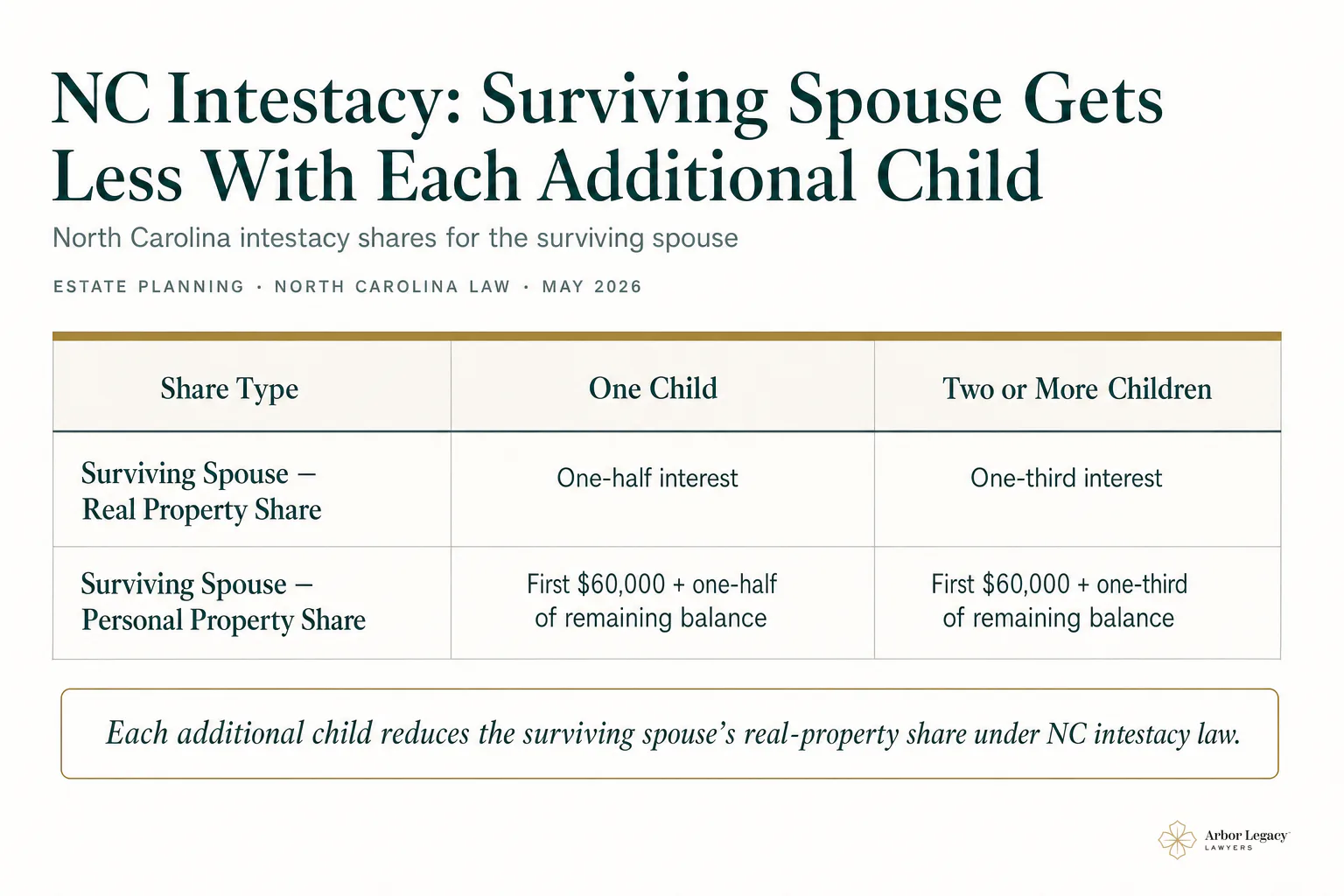
Under North Carolina G.S. 29-14, a spouse with one child takes half the real property and all of the net personal property if it is $60,000 or less, or $60,000 plus half the balance if it exceeds $60,000, with two or more children, that realty share drops to one third. Tennessee and Georgia formulas ignore blended families and non-biological parents.
Guardianship through the courts
AARP notes guardianship can strip decisions about residence, spending, medical care, voting, and marriage. A durable power of attorney and funded trust avoid it.
The Kids Protection gap below
Minor grandchildren need their parents' own guardian nominations, the Kids Protection Planning gap.
How to Start the Conversation With an Aging Parent
Lead with love, not logistics: "I want your wishes honored" opens a door that "get your affairs in order" closes.
Expect to talk more than once
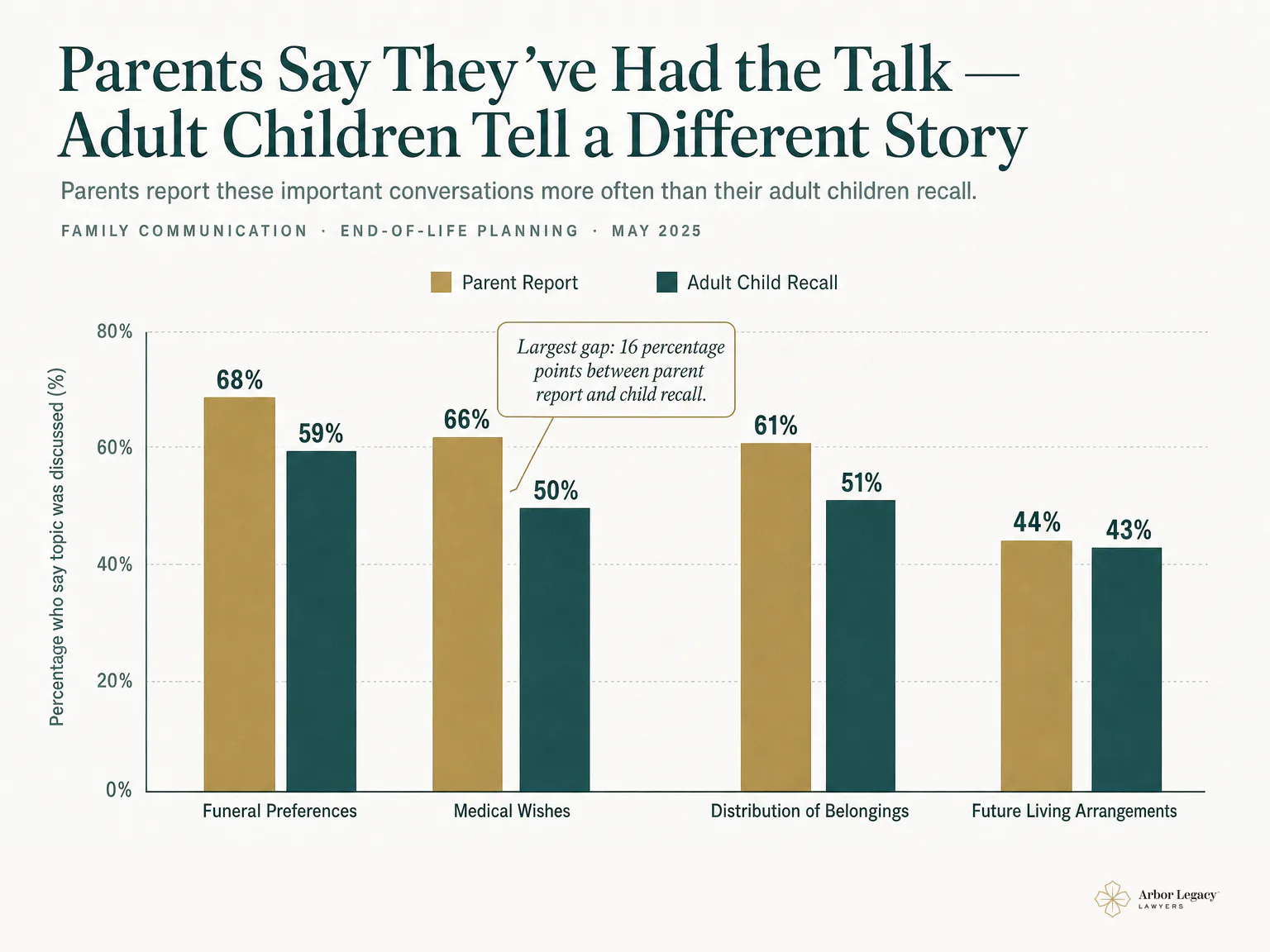
One conversation rarely holds. The Conversation Project found 92% of Americans believe end-of-life talks matter, just 32% have had one. A 2026 funeral preferences survey found only one in three discussed their funeral wishes. Pew reports 66% shared medical care wishes and 61% discussed belongings, leaving gaps families find at the worst time.
Gather this before the meeting
Bring deeds, account statements, insurance policies, beneficiary designations, prior wills or trusts, and dependent details, plus our three documents your parents need right now.
What a Life & Legacy Planning session looks like
A conversation about who your parent loves, what their legacy means, and how legal structure protects both, not paperwork nobody reads.
The Role of a Certified Financial Planner vs. an Estate Planning Attorney
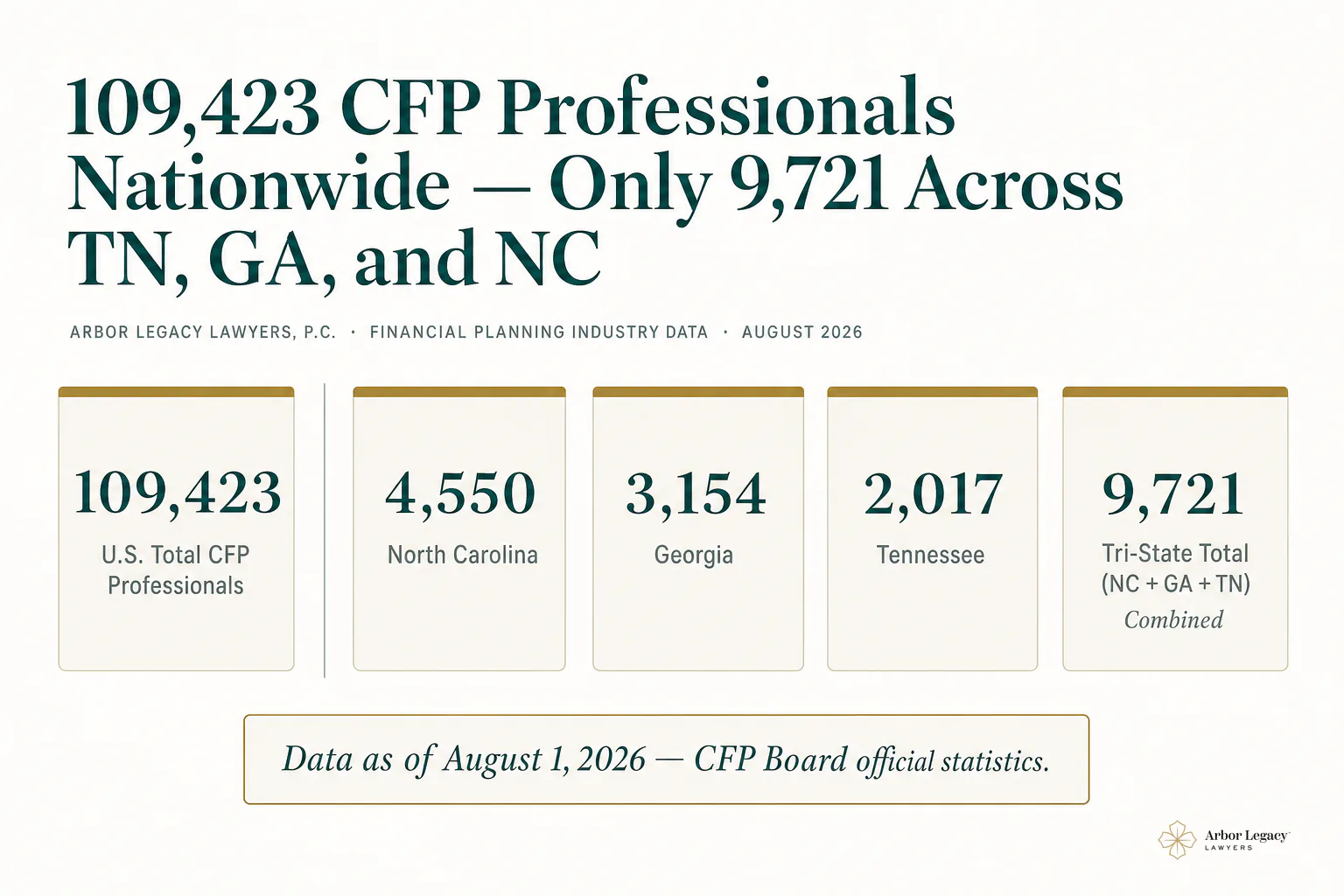
You need both. The Certified Financial Planner Board's 2026 professional demographics report 109,423 CFP professionals nationwide, 4,633 in North Carolina, 3,203 in Georgia, and 2,042 in Tennessee, or 9,878 across the three states.
What each one does
A Certified Financial Planner Board credential holder handles investments, retirement income, and cash flow. CFP certification is not a law license, the attorney drafts the documents.
When elder law experience matters most
Elder law covers Medicaid, benefits eligibility, guardianship, and long-term care. If care is near, experience in Tennessee, Georgia, or North Carolina should shape your parent's decisions.
Frequently Asked Questions
Should my elderly parents put their house in a trust?
Often yes, but not automatically. Revocable trust assets avoid probate yet count as available Medicaid resources, and states may pursue estate recovery. Seek a state-specific Medicaid and tax review first.
What are the biggest elder law mistakes?
Waiting until capacity is disputed, never funding the trust, outdated beneficiary designations, and skipping the advance directive, Pew found just 31% of adults have one. More in our FAQ library.
What is the average cost of an elder law attorney?
No authoritative statewide average exists for Tennessee or Georgia. ABA Model Rule 1.5 requires reasonable fees communicated up front. Ask for a written flat fee covering deeds, trust funding, and Medicaid analysis.
What is the 5 by 5 rule in estate planning?
Under 26 U.S.C. §2514(e), a lapsed withdrawal power counts as a release only above the greater of $5,000 or 5% of trust assets yearly, a drafting detail in certain irrevocable trusts, not a rule for most families.
Your Family Deserves a Plan That Actually Works
Do nothing and a Tennessee, Georgia, or North Carolina court decides who manages your parent's money, makes medical calls, and inherits. Arbor Legacy Lawyers keeps the families we serve out of court and out of conflict. Get started with Arbor Legacy Lawyers and schedule a Life & Legacy Planning session, a conversation, with transparent pricing.
This article is a service of Arbor Legacy Lawyers P.C. and is provided for educational and informational purposes only. It does not constitute legal advice and does not create an attorney-client relationship. Estate planning laws vary by state; consult a qualified attorney about your specific situation.
William Mone****, Family & Estate Planning Attorney, Arbor Legacy Lawyers P.C.